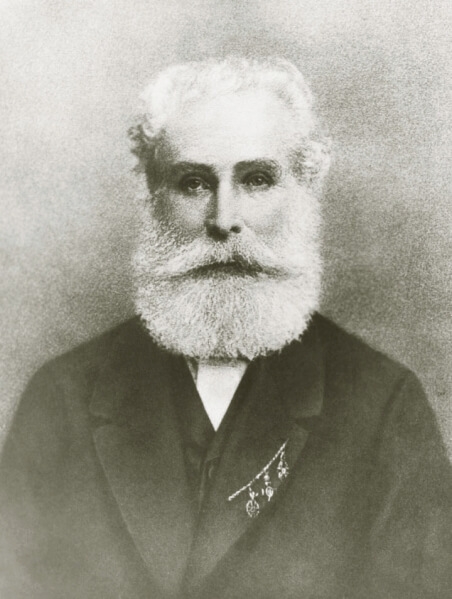
Michael Thonet, one of the greatest designers and industrial visionaries of the modern era.
Skip to content Skip to menu Skip to search

The story told by this book begins in 1796 in the German town of Boppard near Koblenz, when Michael Thonet, one of the greatest designers and industrial visionaries of the modern era, was born. Thonet trained as a cabinetmaker and established a cabinet making workshop in his hometown in 1819. Later, in response to changing trends in the furniture sector, he began to work with bentwood. The most important of his early bentwood designs was the iconic Boppard chair. In 1841 Thonet presented several of his bentwood furniture pieces at an exhibition in Koblenz. The Austrian Chancellor Klemens von Metternich learnt about these and encouraged Thonet to relocate to Vienna, a city that offered the furniture maker with great opportunities for establishing his own furniture company.
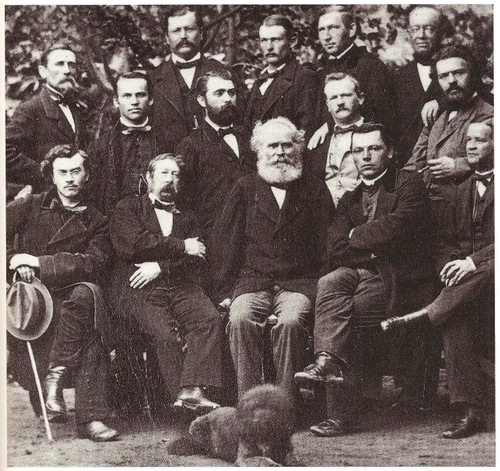
In 1853 Thonet transferred his company to his sons and renamed it Gebrüder
Thonet [The Thonet Brothers], and three years later he opened the
company’s first factory in today’s Czech Republic. He chose the town of
Koryčany in southern Moravia for its abundant supply of beech wood, which he
used to make wooden rods that he bent with the help of hot steam and muscle. And
it was this revolutionary technique of bending wood that changed the character
of modern furniture and its production, as it enabled a shift from the costly
production of low-volume, expensive, luxurious pieces to affordable mass
production.
This transition to mass production represented the most fundamental change to
the furniture production process and heralded the beginnings of modern design
and industrialisation in furniture production. In 1861 Thonet established his
second factory in today’s Czech Republic in the town of Bystřice pod
Hostýnem, which now serves as TON’s headquarters.
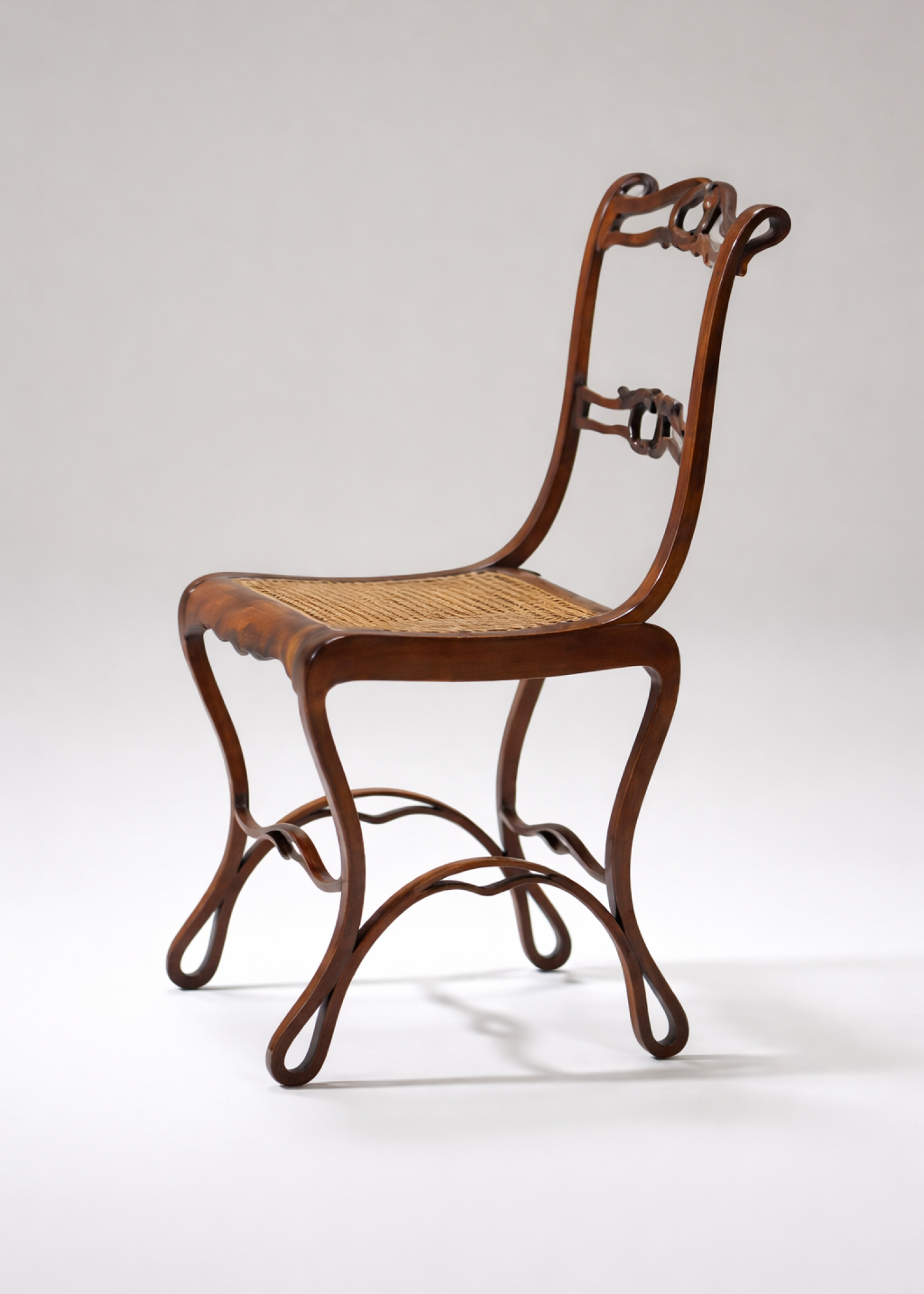
Boppard chair represents the height of Thonet’s early work prior to his move
to Vienna.
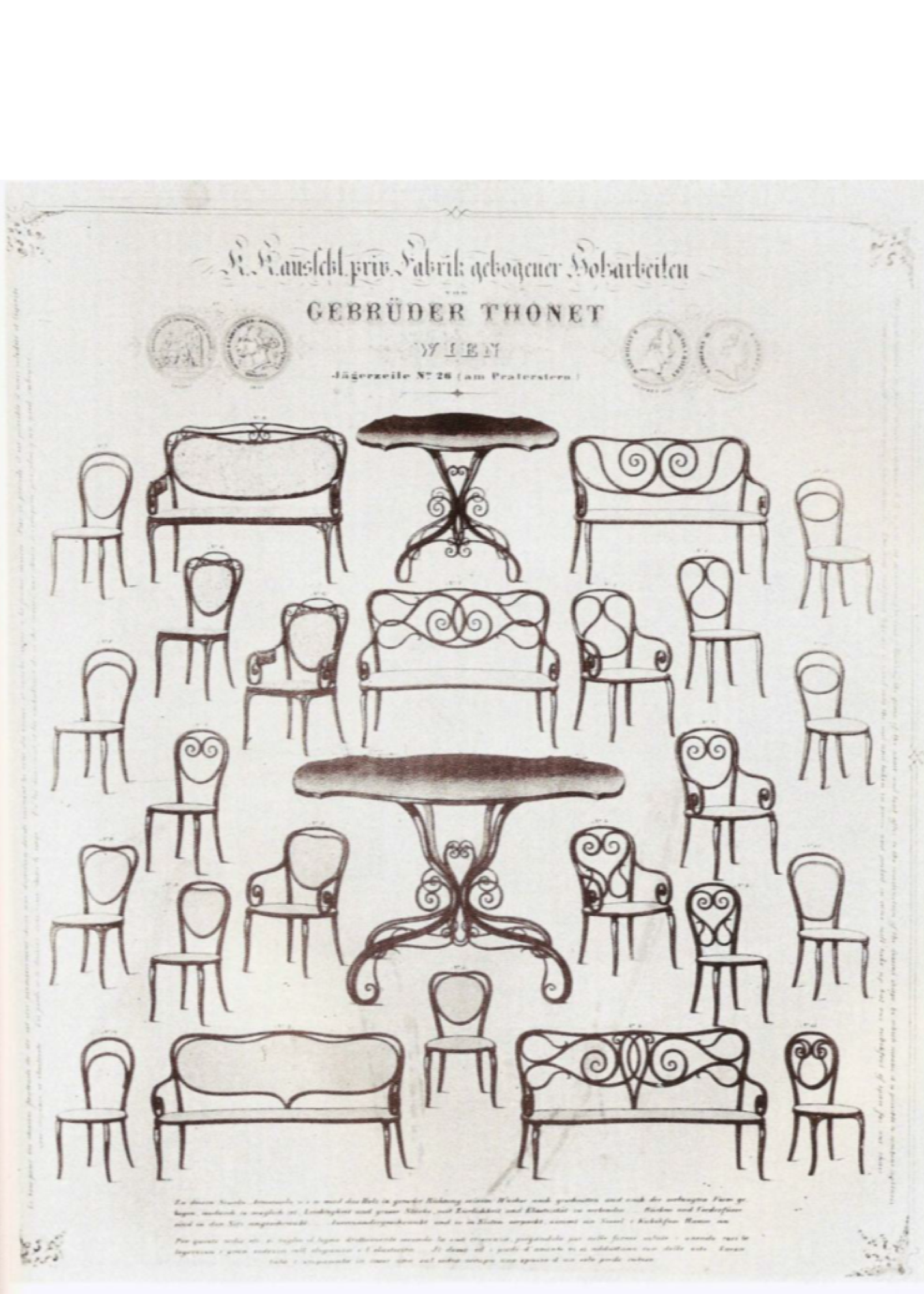
The first catalogue list from 1859
with images of various chair models,
including chair No.14.
The limitations of bending veneer led Thonet to a new technique of bending lengths of beech wood. Thonet learnt that he could bend steamed beech wood without breakage by using a steel band as reinforcement during the bending process. Thonet’s five sons Jakob, Josef, August, Michael Jr., and Franz built on their father’s pioneering ideas and experience and became the company’s driving force after their father’s death in 1871.

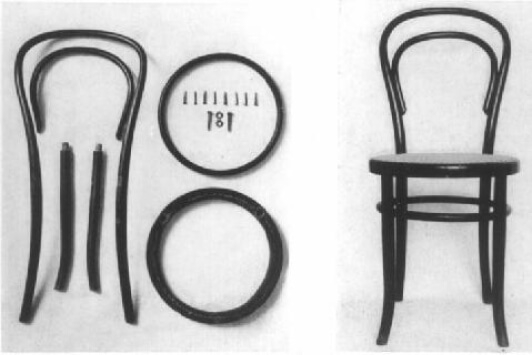
14 Chair embodies all of the qualities of bentwood furniture: economy, simplicity and elegance. While the chair form was designed by the Danhauser company as early as 1820, it was Thonet who in 1859 came up with a process for producing it on an industrial scale.
Six bent components, eight screws and two bolts made up one of the most famous chairs of all times.